






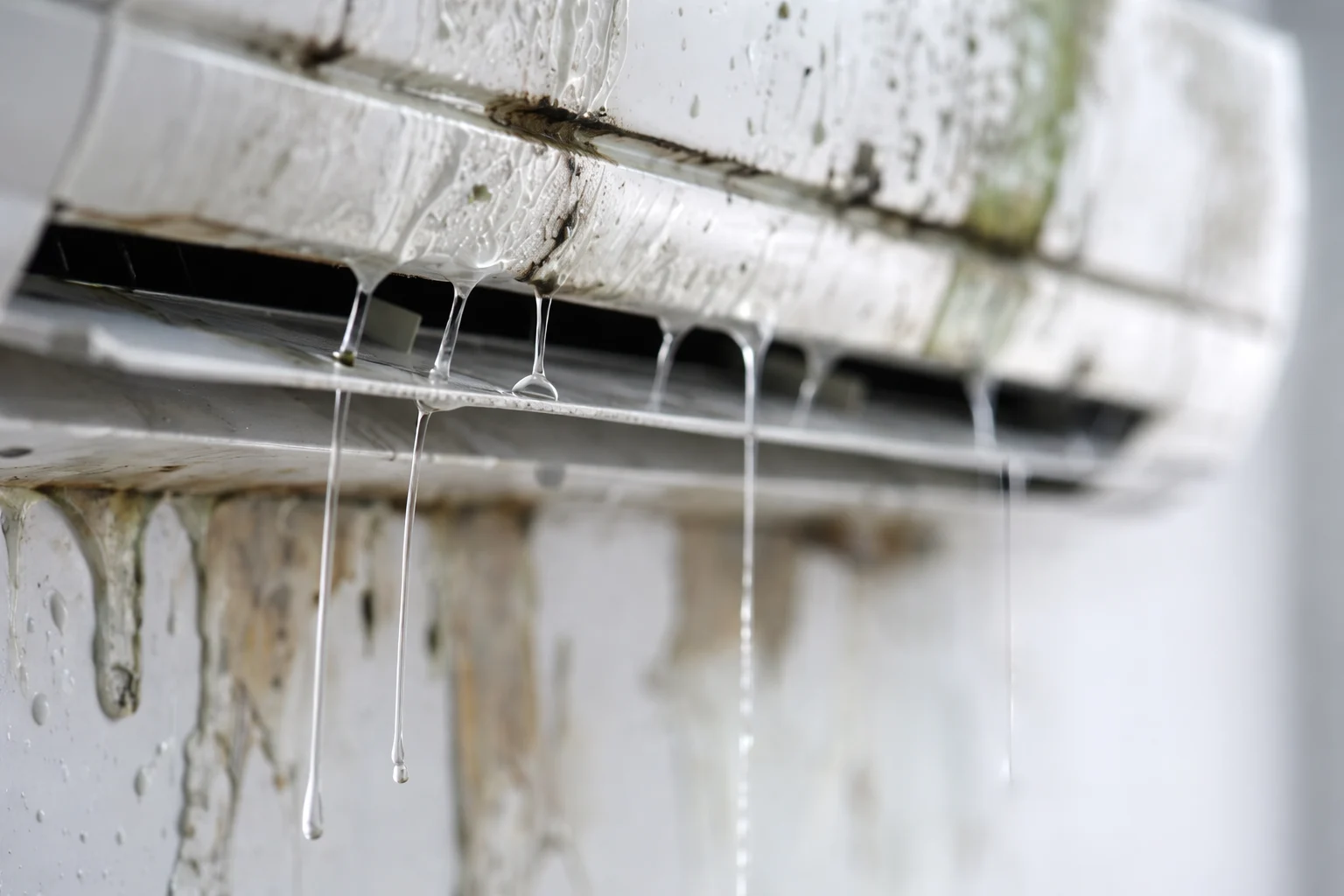
Why do air conditioning units leak water? In most cases, it comes down to blocked drainage, clogged filters, low refrigerant levels, or installation and maintenance issues. A leaking split system or ducted air conditioner is one of the most common problems we see at Radi Air, and while some leaks are minor, others can signal deeper issues that may lead to water damage or reduced system performance if left unchecked.
With over 25 years of experience diagnosing and repairing air conditioning systems across Sydney, we understand that water leaks rarely resolve themselves. Identifying the cause early helps prevent more costly repairs and keeps your system running efficiently. In this guide, we’ll explain the most common reasons air conditioners leak water and what you should do about it.
How Air Conditioners Produce Condensation
Before we look at what causes leaks, it helps to understand why air conditioners produce water in the first place.
As your unit pulls warm air across the evaporator coil, the moisture in that air condenses, much like water droplets forming on a cold glass on a humid day. Under normal operating conditions, this condensation drips into a drip tray and drains away through the condensate drain line. It’s a completely normal part of the cooling process.
The problems start when something disrupts that drainage system.
The Most Common Causes of AC Water Leaks
1. Blocked or Clogged Condensate Drain Line
This is the number one cause of air conditioners leaking water inside that we see across Sydney homes and businesses. Over time, algae, mould, dust, and debris accumulate inside the condensate drain line, eventually blocking it entirely. When the water has nowhere to go, it backs up into the drip tray and overflows into your ceiling, walls, or floor.
A blocked drain line can cause significant water damage very quickly, particularly in ducted systems where the leak isn’t always visible until it’s too late.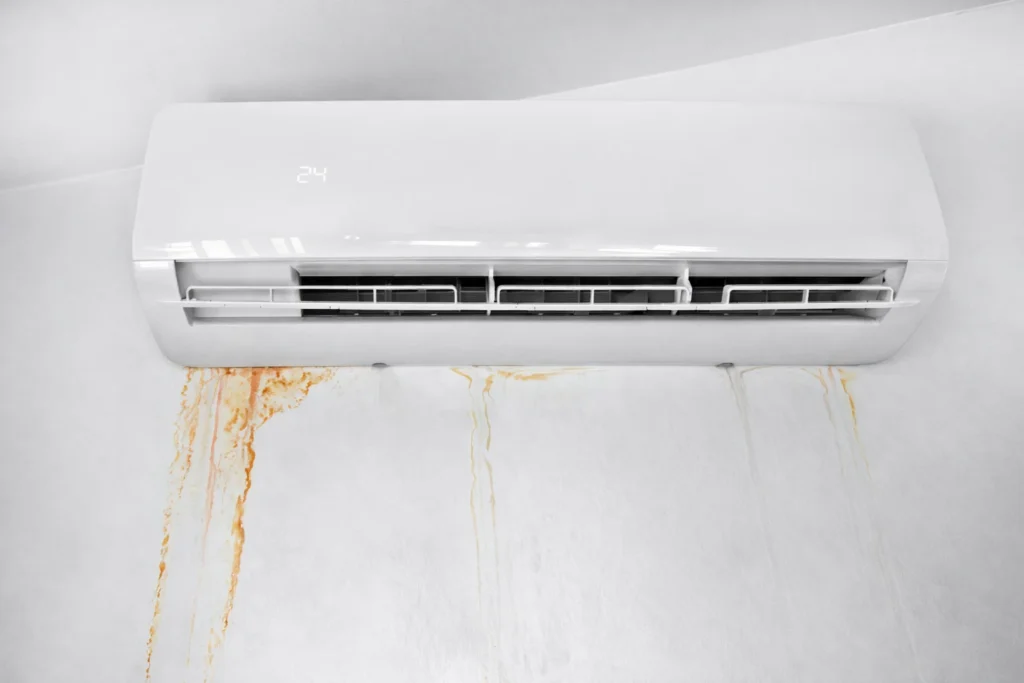
2. Frozen Evaporator Coil
A frozen evaporator coil is a serious issue that’s often misunderstood. When the coil freezes over, ice builds up on its surface. When the system cycles off and that ice melts, the resulting water overwhelms the drip tray, causing a sudden, heavy leak.
Frozen evaporator coil symptoms to watch for include reduced airflow from your vents, your AC not cooling properly, or visible ice on the indoor unit. This is not a problem to ignore, a frozen coil puts excessive strain on the compressor and can lead to complete system failure if left untreated.
3. Low Refrigerant Levels
Low refrigerant AC problems are closely linked to frozen coil issues. When refrigerant levels drop, usually due to a leak in the system, the pressure inside the evaporator coil drops too, causing it to freeze. Beyond triggering water leaks, low refrigerant means your system is working harder to produce less cooling, driving up your energy bills and shortening the life of the unit.
4. Dirty or Blocked Air Filter
A dirty air filter restricts airflow across the evaporator coil. Without adequate airflow, the coil gets too cold and, as you might guess, it freezes. As it thaws, water leaks follow. Dirty filters are one of the easiest causes of AC water leaks to prevent with regular servicing, yet they’re one of the most frequently neglected maintenance items we encounter.
As a general rule, filters should be cleaned every four to six weeks during periods of heavy use.
5. Cracked or Overflowing Drip Tray
The drip tray sits beneath the evaporator coil and catches all the condensation the system produces. Over time, these trays can crack, corrode, or simply fill up if the drain line is partially blocked. A cracked or overflowing drip tray allows water to spill directly into the unit and surrounding structure, causing mould growth and water damage before you might even notice the problem.
6. Poor or Incorrect Installation
When an air conditioning unit isn’t installed with the correct pitch or alignment, the condensation can’t drain properly and pools where it shouldn’t. This is especially common with split systems installed by unlicensed operators or as rushed DIY projects. If your unit has leaked from day one, improper installation is likely the culprit.
Warning Signs You Should Never Ignore
The earlier you catch a water leak, the easier and cheaper the fix. Watch out for:
- Water stains on walls, ceilings, or around the indoor unit
- A musty or mouldy smell coming from the unit or vents
- Visible water pooling near the indoor head unit
- Reduced cooling performance or warm air from vents
- Ice visible on the indoor unit or refrigerant lines
- Your unit switching off and on frequently (short-cycling)
Don’t wait for a small leak to become a big repair bill. If your AC is showing any of the warning signs above, contact Radi Air today for a professional inspection. Our licensed technicians are available only in Sydney and can diagnose and fix the issue before it causes further damage.
Why DIY Fixes Usually Make Things Worse
Attempting to clear a blocked drain line without the right tools can push the blockage deeper or damage the drain assembly. Pouring chemicals into the system without knowing what’s compatible with your refrigerant or drain components can cause corrosion. And if the root cause is a refrigerant leak or a failing compressor, it’ll only delay proper diagnosis while the damage worsens.
In Sydney, refrigerant handling is strictly regulated and must be carried out by a licensed HVAC technician. Working with refrigerants without the appropriate ARCTick licence is illegal and dangerous.
Why Professional Servicing Matters
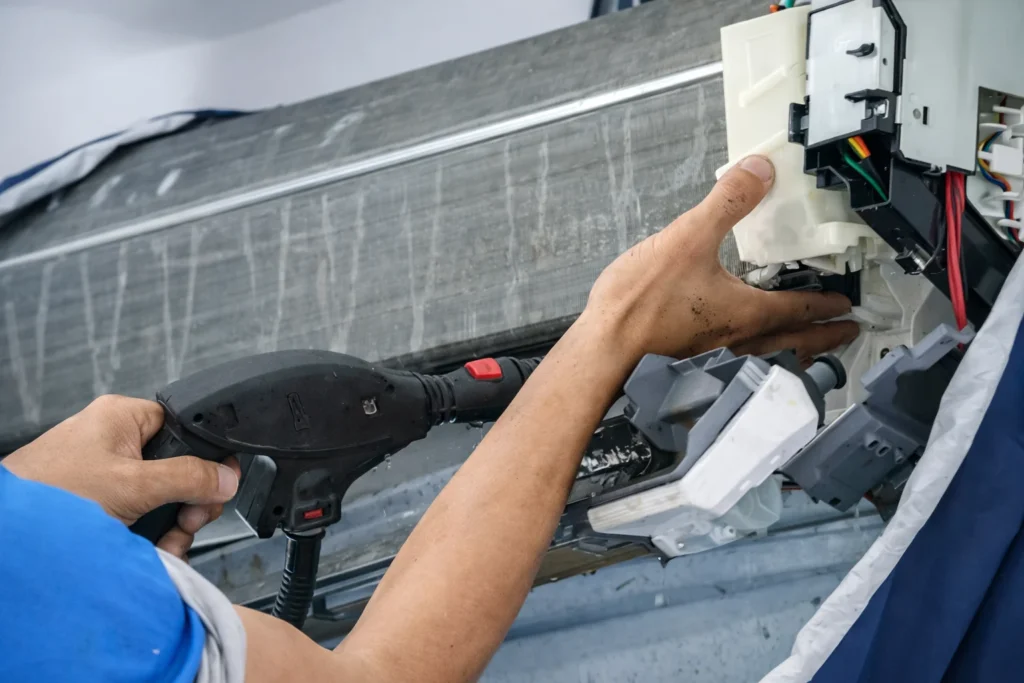
At Radi Air, we’ve been diagnosing and repairing air conditioning leaks across Sydney for over 25 years. Our HVAC maintenance services include a full system inspection covering the condensate drain line, drip tray, evaporator coil, air filter, refrigerant pressure, and installation integrity.
Whether you’re dealing with a split system leaking water inside your home, a ducted air conditioning water leak above your ceiling, or a commercial system that’s let you down on a 40-degree day, our team has the tools, experience, and licences to fix it properly.
Professional air conditioner servicing isn’t just about fixing problems when they arise, it’s about preventing them in the first place, extending the life of your system, and keeping your energy bills in check.
When to Contact Radi Air?
A leaking air conditioner won’t get better on its own. The longer it’s left, the more likely you are to be dealing with water damage, mould, or a complete system breakdown, all of which cost far more to fix than the original leak.
Our licensed technicians are ready to help. With 25+ years of experience, we provide trusted, professional service across Sydney, keeping homes and businesses comfortable year-round.
Frequently Asked Questions
1. Why is my air conditioner leaking water inside my house?
The most common reasons are a blocked condensate drain line, a cracked or overflowing drip tray, or a frozen evaporator coil that’s thawing.
2. Is it dangerous if my AC unit is leaking water?
A water leak itself isn’t immediately dangerous, but the consequences can be. Prolonged leaks cause water damage to ceilings, walls, and flooring, and create the conditions for mould growth which poses real health risks.
3. Can I still use my air conditioner if it’s leaking water?
Continuing to run a leaking system can accelerate damage to internal components and worsen whatever is causing the leak in the first place.
4. How do I know if my evaporator coil is frozen?
Frozen evaporator coil symptoms include warm or reduced airflow from your vents, visible ice on the indoor unit or refrigerant lines, and water leaking as the ice melts when the system cycles off. If you notice any of these, turn the unit off and contact a technician running the system with a frozen coil that can damage the compressor.
5. How often should I service my air conditioner to prevent leaks?
Ideally before summer. Air filters should be cleaned every four to six weeks during heavy-use periods. Regular HVAC maintenance services keep the condensate drain clear, the coil clean, and the system running efficiently, reducing the risk of leaks significantly.
6. What does a blocked condensate drain line look like?
You often can’t see the blockage directly, but the signs include water overflowing from the drip tray, a gurgling or bubbling sound from the unit, or water stains around the indoor head. In some cases, you may notice a musty smell caused by algae or mould inside the drain line.
7. How much does AC leak repair cost in Australia?
Air conditioner service cost in Australia varies depending on the cause and complexity of the repair. A straightforward drain line clear or filter clean is typically a minor cost, while a refrigerant repair or component replacement will be more involved. At Radi Air, we provide transparent, upfront quotes before any work begins.
8. Does Radi Air offer emergency air conditioning repair services?
Yes. We understand that a leaking air conditioner, especially during an Australian summer, can’t always wait. Our team offers 24/7 emergency air conditioning repair across our service areas.
