






Most air conditioner problems are easy to notice. The system stops cooling, starts making strange noises or simply won’t turn on.
Mould can be different. It can start growing inside an air conditioner without being immediately visible. Because your system circulates air through your home, mould, dust and other contaminants can potentially be carried into the air you breathe.
So, how do you know if your air con has mould?
Here are five signs to look out for:
1. Your Air Conditioner smells musty
One of the most common signs of mould is a musty or damp smell coming from your air conditioner.
You may notice it as soon as the system starts or after it has been running for a while. The smell can sometimes disappear temporarily, only to return the next time you turn the air con on.
A dirty filter can cause unpleasant smells, but if cleaning or replacing the filter doesn’t solve the problem, mould or moisture build-up inside the unit could be the reason.
If your split system smells musty every time you turn it on, it’s worth having the indoor unit checked.
2. You can see mould around the unit
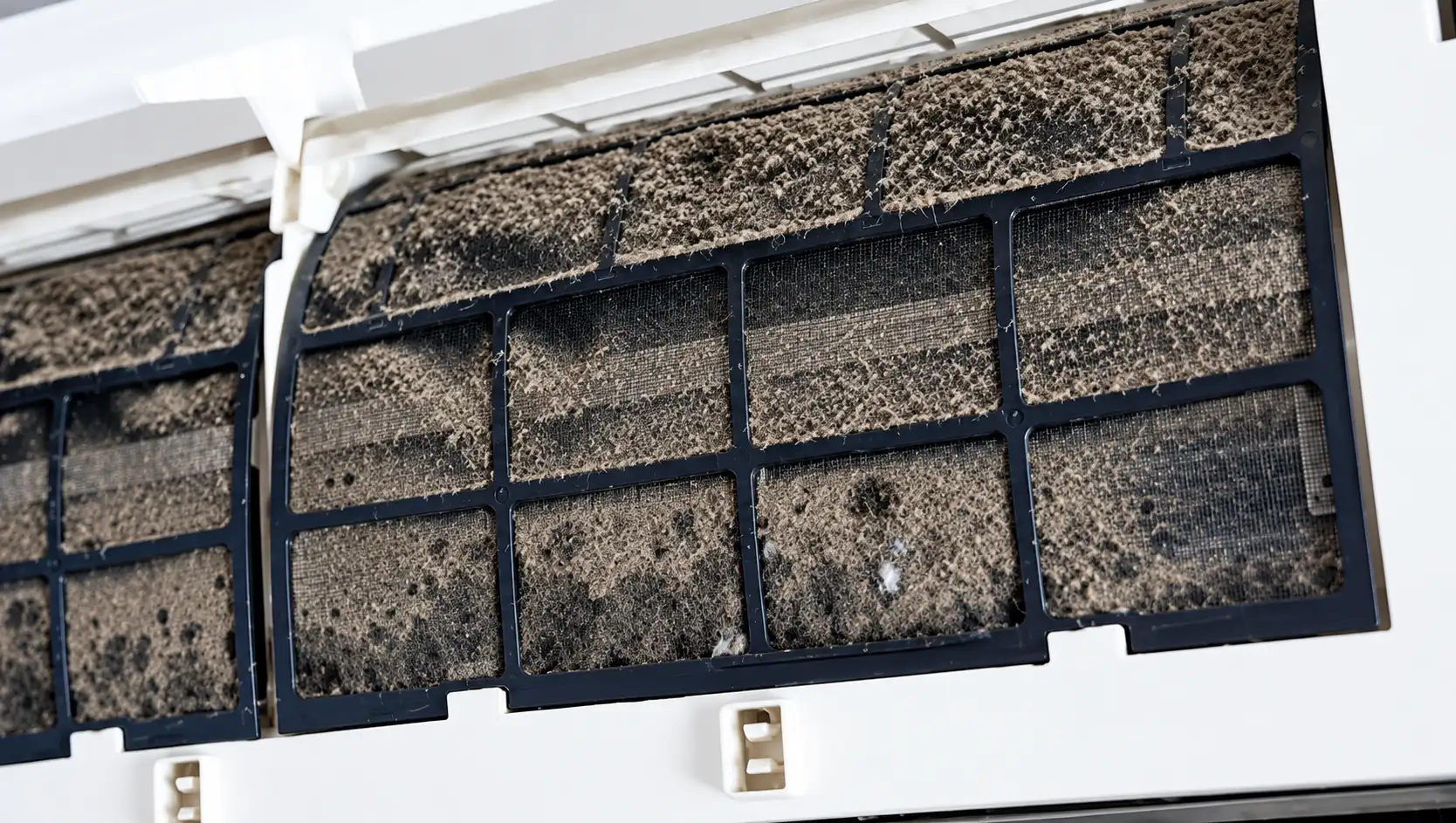
This one sounds obvious, but mould isn’t always easy to spot. Check the areas you can safely access, including around the filters, air outlet and visible parts of the indoor unit. You may notice dark, green, grey or white patches or growth.
However, visible mould around the air conditioner doesn’t necessarily mean that’s where the problem starts. Mould can also develop around the indoor coil, drain tray or other internal areas.
If mould keeps coming back after you clean the visible area, there may be an underlying moisture or drainage problem that needs attention.
3. The air filter is dirty, damp or discoloured
Your air conditioner’s filter catches dust and other airborne particles before air passes through the system.
If the filter becomes heavily blocked, dirty or damp, it can affect airflow and create a less hygienic environment inside the unit. In humid conditions, moisture and accumulated dirt can also provide a suitable environment for mould growth.
Check your filters regularly and follow the manufacturer’s cleaning or replacement recommendations. If you find visible mould on the filter or inside the unit, don’t just put the filter back and keep running the system.
4. There is excess moisture or water around the air con
Air conditioners produce condensation. That’s normal. Water pooling where it shouldn’t isn’t. If you notice dripping water, dampness around the indoor unit or unusual humidity while the air conditioner is running, there could be an issue with drainage, the condensate drain or another part of the system.
A blocked drain can cause water to remain inside the unit, creating conditions that encourage mould growth.
If your air conditioner is leaking water and also has a musty smell, it’s a good idea to have the system inspected rather than continuing to run it and hoping the problem goes away.
5. You notice more Sneezing, Coughing or Irritation when the air conditioner is running
Mould and other airborne particles can irritate the eyes, nose, throat and respiratory system, particularly in people who are sensitive to them.
If someone in your home regularly experiences sneezing, coughing, a runny nose, itchy eyes or throat irritation when the air conditioner is operating, indoor air quality may be worth investigating.
These symptoms can have many causes, so they don’t automatically mean your air conditioner has mould.
However, if the symptoms occur alongside a musty smell, visible mould or moisture problems, getting the air conditioner checked is a sensible next step.
If you experience significant breathing difficulties or other serious symptoms, seek appropriate medical advice rather than assuming the air conditioner is the cause.
Can you clean mould from an air conditioner yourself?
For basic maintenance, homeowners can usually clean or replace accessible air filters according to the manufacturer’s instructions.
But cleaning visible mould from the filter or front of the unit doesn’t necessarily remove mould or contamination from internal components.
A professional air conditioner clean may involve inspecting and cleaning areas such as the filters, indoor coil, fan, drain tray and other accessible components, depending on the type and condition of the system.
The right cleaning method also depends on the air conditioner itself and where the mould or moisture is located.
How can you prevent mould in your air conditioner?
Regular maintenance can help reduce the conditions that allow mould to develop.
A few simple steps include:
- Clean or replace air filters as recommended by the manufacturer.
- Keep the area around the indoor unit clean and free from dust.
- Make sure condensate water is draining correctly.
- Don’t ignore water leaks or unusual moisture around the unit.
- Book professional servicing from Radi Air when the system is heavily soiled or isn’t operating normally.
- Address persistent musty smells rather than simply masking them with air fresheners.
Regular cleaning is particularly important if your air conditioner operates frequently or your home has higher humidity levels.
Mould in your Air Conditioner? Get it checked
A musty smell doesn’t always mean you have mould, and a dirty filter doesn’t necessarily mean there’s a serious problem.
But when you have a combination of musty smells, visible mould, moisture, dirty filters or recurring air quality issues, it’s worth finding out what’s causing them.
At Radi Air, we can inspect your air conditioning system and provide professional cleaning and mould removal where required.
Whether you have a split system or ducted air conditioning, don’t wait for a small problem to become a bigger one.
Need your air conditioner cleaned or checked for mould? Contact Raid Air today.
Frequently Asked Questions
A musty or damp smell when you switch on your air con can come from moisture, dust, a dirty filter or mould growth inside the unit.
Air con naturally produce condensation while cooling, and moisture can collect around areas such as the indoor coil, drain tray and condensate drainage system. If dirt and moisture build up over time, they can contribute to unpleasant smells.
If you’ve cleaned the filter and the smell keeps coming back, the problem may be further inside the unit. That’s when it’s worth having a qualified technician like Radi Air inspect the system.
Not always. A musty smell can have several causes, including mould, accumulated dirt, stagnant moisture or a drainage issue.
However, if the smell is persistent or you also notice visible mould, excess moisture or water around the indoor unit, it shouldn’t be ignored.
Cleaning the filter is a good first step, but if the odour returns, our experienced technician can check the system to find where the smell is coming from.
Mould can develop in parts of an air con where moisture and dirt collect. Depending on the system, this may include the air filters, indoor coil, drain tray, fan and condensate drainage areas.
These areas aren’t all easily accessible from outside the unit, which is why simply wiping the front cover or cleaning the filter may not resolve a recurring mould problem.
If you keep noticing a musty smell or visible mould, our professional air con service across Sydney can help identify where the build-up is occurring.
You can clean accessible air filters yourself, as long as you follow the manufacturer’s cleaning instructions.
However, an air conditioner contains internal components that shouldn’t be dismantled or cleaned without the appropriate knowledge and equipment. Electrical and refrigerant-related work should also be left to appropriately qualified professionals.
If mould is visible inside the unit, the smell keeps returning, or you’re also dealing with water or moisture, it’s better to have the system checked rather than trying to clean the internal components yourself.
It might, particularly if the filter is dirty and is contributing to the odour. But it won’t necessarily remove a smell that is coming from deeper inside the air conditioner.
If the smell returns shortly after you’ve cleaned the filter, there could be dirt, moisture or mould around the indoor coil, drain tray, fan or drainage system.
Regular filter cleaning is important, but it is only one part of maintaining an air conditioner. A professional service can check other components that may be affecting the system’s cleanliness and performance.
However, an air conditioner contains internal components that shouldn’t be dismantled or cleaned without the appropriate knowledge and equipment. Electrical and refrigerant-related work should also be left to appropriately qualified professionals.
If mould is visible inside the unit, the smell keeps returning, or you’re also dealing with water or moisture, it’s better to have the system checked rather than trying to clean the internal components yourself.
There isn’t one cleaning schedule that suits every air conditioner. It depends on the type of system, how often it runs and the environment it’s operating in.
Filters may need cleaning more frequently, particularly during periods of heavy use or in dusty environments. Professional servicing can be scheduled according to the condition and use of the system.
Radi Air’s existing guidance recommends regular servicing, with commercial systems generally requiring more frequent attention than residential systems.
If your air conditioner develops a persistent musty smell, starts leaking water or isn’t performing as it normally should, don’t wait for the next scheduled service. Get the issue checked.