



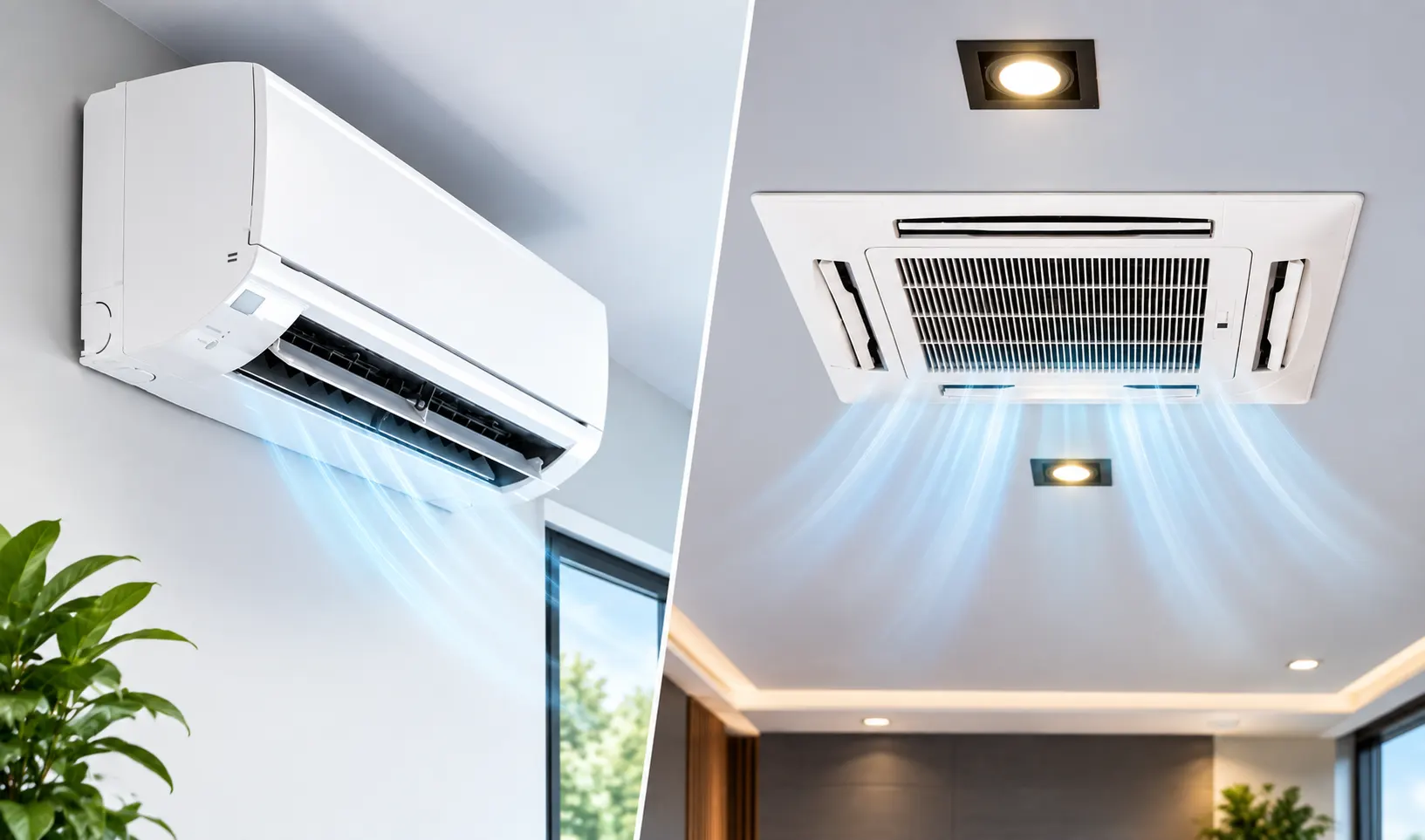
Choosing the right air conditioning system is an important investment for any Sydney homeowner. With summer temperatures in Western Sydney regularly reaching the high 30s and, at times, exceeding 40°C, while coastal areas can experience prolonged periods of heat and humidity, having a reliable and energy-efficient heating and cooling system is essential for year-round comfort.
For many Sydney homeowners, the choice often comes down to two popular options: reverse cycle ducted air conditioning and multi-split systems.
Both systems can provide effective heating and cooling, but they differ significantly in terms of installation requirements, room coverage, zoning, energy management, aesthetics and suitability for different property layouts.
Ducted AC vs Multi-Split: Which System is Right for Your Sydney Home?
The right choice depends largely on your home’s layout, available ceiling or roof space, the number of rooms you want to condition and how you use your air conditioning.
Ducted air conditioning may be the better option if you:
- Own a larger family home or multi-bedroom property.
- Have suitable roof or ceiling cavity space for ductwork.
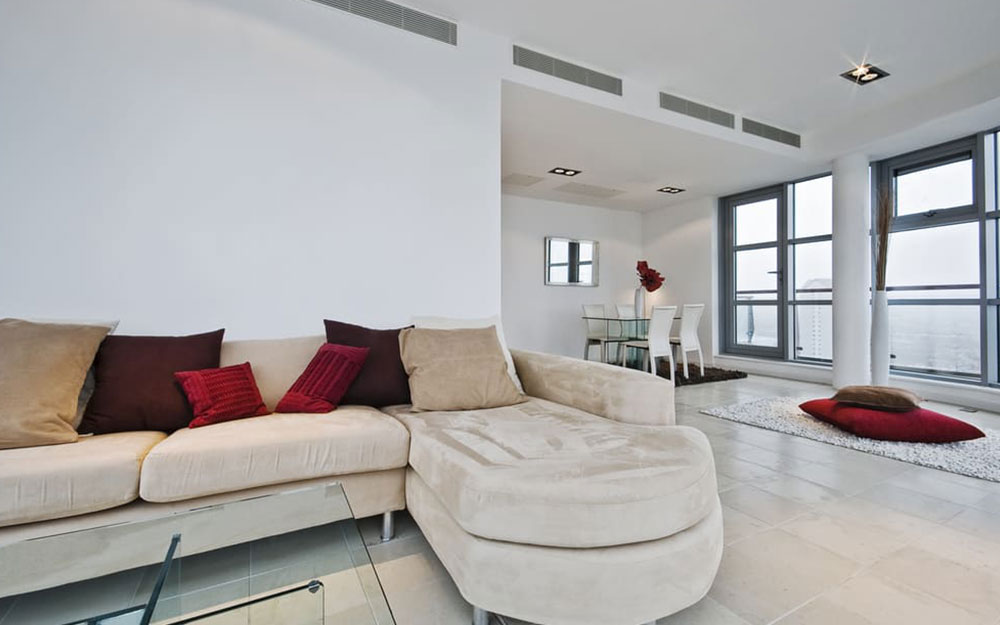
- Want a discreet system with vents integrated into the ceiling.
- Need heating and cooling across multiple areas of the home.
- Want the flexibility of zoning different areas according to how your household uses them.
A multi-split system may be more suitable if you:
- Live in a townhouse, apartment or property with limited roof or ceiling space.
- Only need air conditioning in selected rooms.
- Want to avoid installing extensive ductwork.
- Need independent temperature control across several rooms.
- Are looking for a practical solution for targeted heating and cooling.
Ducted AC vs Multi-Split Systems: Side-by-Side Comparison
To make the decision easier, the comparison below looks at how ducted and multi-split air conditioning systems differ across some of the key factors Sydney homeowners should consider, including installation, room coverage, zoning, energy usage, aesthetics and suitability for different property types.
Feature / Metric | Reverse Cycle Ducted AC | Multi-Split AC System |
Ideal Property Types | 3–5 bedroom homes, single & double-storey with roof cavities | Townhouses, apartments, flat-roof builds, 2–4 targeted rooms |
Visual Appearance | Sleek, flush-mounted ceiling vents (nearly invisible) | Wall-mounted indoor head units visible in each conditioned room |
Zoning & Temperature Control | Centralized smart zoning (e.g., AirTouch 5) | Independent temperature control per individual indoor unit |
Outdoor Unit Footprint | 1 large outdoor compressor unit | 1 outdoor compressor unit driving up to 5 wall heads |
Structural Requirements | Requires 300mm–500mm roof/ceiling cavity space | Requires no ceiling ducting; simple wall penetration for pipework |
Impact on Home Value | High (Highly sought-after feature in Sydney real estate) | Moderate (Practical upgrade for targeted living areas) |
Deep Dive: Ducted Air Conditioning for Sydney Homes
A ducted air conditioning system uses a central indoor unit, typically installed within the roof space or, in some homes, beneath the floor. Conditioned air is then distributed throughout the home via a network of insulated ductwork connected to ceiling vents or linear slot diffusers.
This makes ducted air conditioning an effective option for homeowners who want consistent heating and cooling across multiple rooms while maintaining a clean, unobtrusive interior.
The Benefits of Smart Zoning with AirTouch 5
Traditional ducted systems generally conditioned multiple areas of the home at the same time, which could result in unnecessary energy use when some rooms were unoccupied.
Modern ducted systems can incorporate smart zoning controllers such as AirTouch 5. Zoning allows different areas of the home to be controlled independently, such as upstairs bedrooms, downstairs living areas or a home office.
Depending on the system configuration, homeowners can reduce or stop airflow to areas that are not being used and adjust individual zones from a smartphone, tablet or wall-mounted controller.
This can help reduce unnecessary energy consumption and improve comfort by directing conditioned air where it is actually needed.
What are the Pros & Cons of Ducted Air Conditioning
Pros
- Seamless Appearance:
Ceiling vents sit neatly within the ceiling, helping maintain a clean interior without multiple wall-mounted indoor units. - Quiet Operation:
Because the main indoor unit is generally positioned within the roof space, much of the equipment is kept away from living areas and bedrooms. - Whole-Home Comfort:
A correctly designed ducted system can provide heating and cooling across multiple rooms and living areas from a single system. - Suitable for Larger Homes:
Ducted air conditioning can be particularly well suited to larger homes where multiple rooms need to be conditioned regularly.
Cons
- Requires Suitable Roof or Floor Space:
Ducted systems need adequate space for the indoor unit and ductwork. Homes with concrete ceilings, limited roof cavities or certain flat-roof designs may require alternative solutions or additional building work. - More Complex Installation:
Installation involves planning duct routes, return-air locations, ceiling outlets and zoning requirements. Existing homes may require additional access or building work. - Higher Upfront Installation Cost:
Compared with installing individual split systems, a ducted system generally involves a more substantial initial investment due to the central unit, ductwork and installation requirements.
Deep Dive: Multi-Split Air Conditioning Systems
A multi-split air conditioning system uses one outdoor unit to operate multiple indoor units installed in different rooms.
The indoor units can include wall-mounted units, floor consoles or other compatible configurations, depending on the system and property.
Unlike a traditional single-split system, where each indoor unit generally requires its own outdoor unit, a multi-split system can reduce the number of outdoor condensers required around the property.
Room-by-Room Temperature Control
One of the key advantages of a multi-split system is the ability to control individual rooms independently.
For example, you may choose to cool a bedroom to a comfortable temperature while keeping the living area at a different setting. Indoor units can also be switched off when particular rooms are not being used.
This makes multi-split systems a practical option for homes where only selected rooms require regular heating and cooling.
What are the Pros & Cons of Multi-Split Air Conditioning
Pros
- Suitable for Homes with Limited Ceiling Access:
Multi-split systems do not require extensive ductwork, making them useful for homes where installing ducting is difficult or impractical. - Independent Room Control:
Each indoor unit can generally be controlled separately, allowing different rooms to operate at different temperatures or remain switched off when not required. - Flexible Installation:
Homeowners can select the number and location of indoor units based on their current requirements, subject to the capacity and configuration of the selected system. - Reduced Outdoor Equipment:
A single outdoor unit can support multiple indoor units, potentially reducing the amount of external wall and ground space required for condensers.
Cons
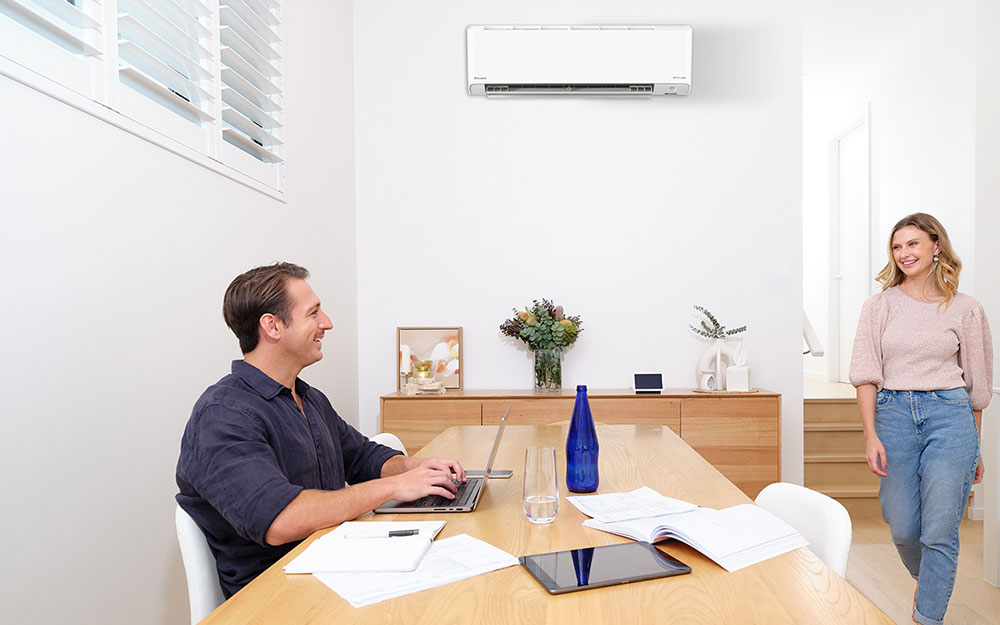
- Visible Indoor Units:
Wall-mounted indoor units are visible within the room and require suitable wall space. - Installation Limitations:
The distance between indoor units and the outdoor unit, along with refrigerant pipework requirements and system capacity, can influence where units can be installed. - Less Seamless Appearance:
Compared with ducted air conditioning, multiple indoor wall units can have a greater visual presence within the home.
Energy Efficiency & Solar Integration
Choosing an air conditioning system should involve more than simply comparing the number of indoor units. Overall efficiency depends on the system’s capacity, efficiency rating, home insulation, operating conditions and how the system is used.
Using Solar Energy to Offset Air Conditioning Costs
Greater Western Sydney receives strong levels of solar exposure throughout much of the year, making solar PV a useful consideration for homeowners with air conditioning.
Both modern inverter ducted and multi-split systems can operate alongside residential solar systems.
Where practical, homeowners with solar generation can use their available daytime solar energy to operate air conditioning during periods of higher solar production. For example, pre-cooling the home during the middle of the day may help improve comfort later in the afternoon while making use of available solar generation.
Actual savings will depend on the home’s solar system, electricity plan, air conditioner efficiency, weather conditions and household energy usage.
Which Air Conditioning System Is Right for Your Property?
Different home designs can make one air conditioning solution more practical than another.
Modern Single or Two-Storey Homes
Oran Park, Gregory Hills, Leppington and surrounding areas
New homes designed with suitable roof spaces and ceiling access can be well suited to ducted reverse-cycle air conditioning.
Planning the system during construction or renovation can also make it easier to position ductwork, vents and return-air grilles for a clean finished result.
Townhouses, Units & Flat-Roof Homes
Smeaton Grange and Inner Sydney
Homes with limited roof cavities, concrete ceilings, skillion roofs or strata restrictions may present challenges for traditional ducted installations.
In these situations, a multi-split system may provide an effective alternative without requiring extensive ductwork or major structural changes.
Existing Two-Storey Homes
Retrofitting ducted air conditioning into an existing two-storey home requires careful consideration of ceiling access, available roof space and how ductwork can be routed between levels.
Depending on the home’s construction, a multi-split system downstairs combined with ducted air conditioning upstairs may be considered as part of a tailored solution.
Get Expert Air Conditioning Advice for Your Sydney Home
Whether you’re building a new home, renovating or replacing an older air conditioning system, choosing between ducted and multi-split air conditioning depends on your property’s design, available installation space, household requirements and how you use each area of the home.
At Radi Air, our qualified HVAC technicians can assess your property and recommend an air conditioning solution based on your home’s layout, heating and cooling requirements and installation options across Greater Sydney, Campbelltown and the Macarthur region.
Looking for whole-home comfort?
Explore our ducted air conditioning installation services.
Want independent room-by-room control?
Explore our split system air conditioning solutions.
Located in Smeaton Grange or surrounding suburbs?
Speak with the local Radi Air team at 1800212308 about an on-site assessment and discuss the most suitable air conditioning options for your home.
Contact Radi Air today to discuss your home’s requirements and arrange an on-site assessment.
Frequently Asked Questions
Not necessarily. A multi-split system allows individual indoor units to be switched on or off according to the rooms being used. Modern ducted systems with zoning can also reduce airflow to unused areas.
The overall energy consumption of either system depends on factors including system capacity, efficiency, the number of rooms being conditioned, outdoor temperature, insulation and how the system is operated.
Rather than choosing a system based solely on its type, homeowners should have the property assessed to determine the most appropriate configuration.
Yes, in many cases. However, the feasibility depends on the home’s construction, roof space, ceiling access and the ability to route ductwork between levels.
Where conventional ducting is difficult to install, alternatives such as a multi-split system or a combination of ducted and split systems may be considered.
Our qualified HVAC professional should assess the property before recommending a particular configuration.
For most residential systems, filters should be checked and cleaned regularly, with the exact frequency depending on usage, indoor air quality and the manufacturer’s recommendations.
Homes exposed to higher levels of dust, pollen or other airborne particles may require more frequent cleaning.
Keeping filters clean helps maintain airflow and system performance. Our Professional servicing should also be carried out at appropriate intervals based on the equipment and manufacturer’s requirements.
A standard multi-split system (2–4 indoor heads) can usually be installed in 1 day. Installing a full reverse cycle ducted system in a single-storey Sydney home typically takes 1 to 2 days. For double-storey homes or complex smart zoning setups (like AirTouch 5), installation may take 2 to 3 days to complete duct routing, electrical work, and airflow balancing.
Ducted air conditioning generally requires a minimum roof cavity clearance of 300mm to 500mm to fit the indoor fan coil unit, main trunking, and flexible ducting. If your home has a flat roof, cathedral ceiling, or concrete slab between floors, a multi-split system or dropped bulkhead ducting is recommended instead.
Smart zoning systems (like AirTouch 5) use motorized dampers inside the ductwork to open or close airflow to individual rooms. Instead of dumping conditioned air into unused guest rooms or empty living areas, air is directed only where needed, allowing your inverter compressor to ramp down and use significantly less electricity.