



When an air conditioner turns off by itself, it’s rarely a coincidence. Unexpected shutdowns are usually a sign that the system is protecting itself from a fault or operating condition that could cause damage. At Radi Air, this is one of the most common issues encountered across residential and commercial air conditioning systems throughout Sydney.
With more than 25 years of experience in HVAC and air quality services, we regularly assist homeowners and businesses dealing with air conditioners that keep turning off, struggle to stay running, or shut down during hot weather. While the symptoms may seem minor at first, ignoring them often leads to higher repair costs, reduced efficiency, and shorter system lifespan.
Below are the most common reasons an air conditioner shuts down unexpectedly, along with guidance on when professional air conditioning repair is recommended.
Why Is My Air Conditioner Shutting Down Unexpectedly?
1. Dirty or Blocked Air Filters
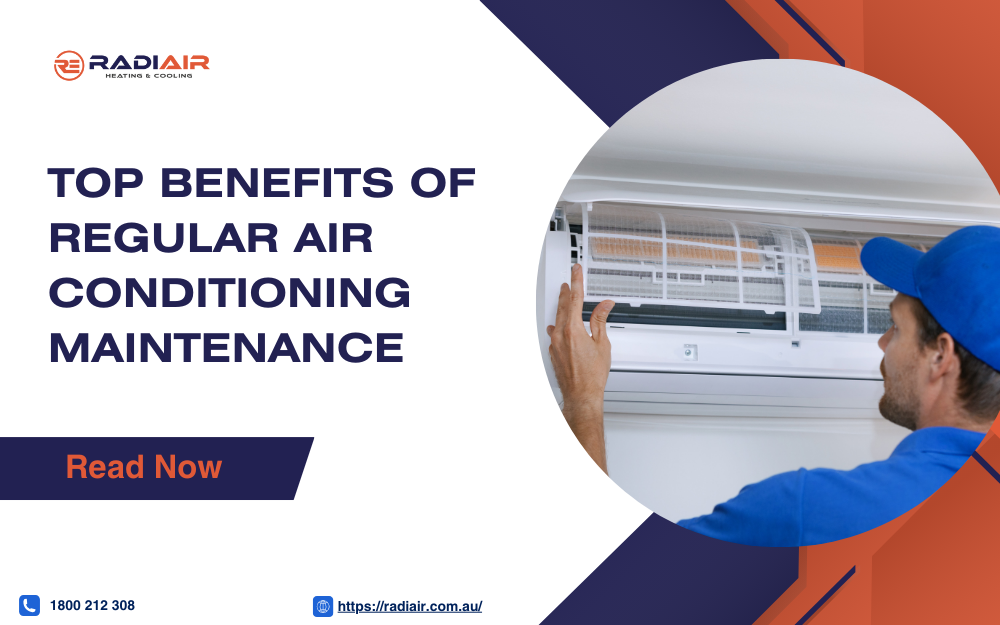
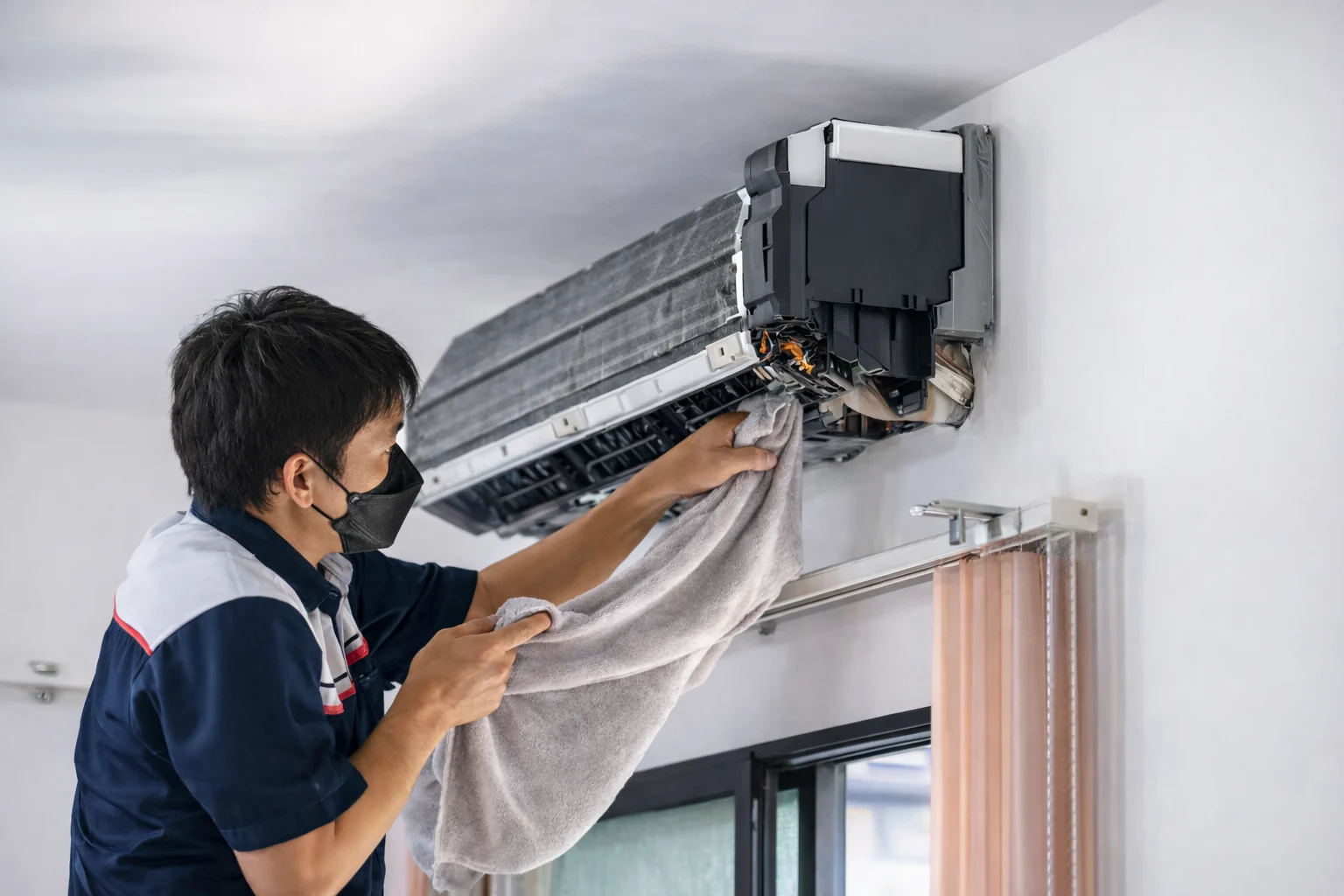
Dirty or blocked air filters are one of the leading causes of an air conditioner turning off by itself. When filters become clogged with dust and debris, airflow through the system is restricted.
Reduced airflow forces the system to work harder, increasing internal temperatures and placing strain on key components. As a safety measure, many units will shut down to prevent overheating. Dirty air filter AC problems can also cause poor cooling and uneven airflow throughout the space. Regular filter cleaning or replacement is essential, particularly during peak cooling seasons.
2. Overheating and Thermal Overload
Air conditioners generate heat as part of their normal operation, and they rely on consistent airflow to keep internal components cool. When airflow is restricted, whether from a dirty filter, a blocked outdoor unit, or poor ventilation around the condenser. The system overheats. Most modern units have a thermal overload switch that cuts power automatically to prevent serious damage. We’ve seen outdoor units completely buried by overgrown shrubs, or installed in poorly ventilated spaces. The unit shuts down not because it’s faulty, but because it physically can’t cool itself. Make sure your outdoor unit has at least half a metre of clear space around it.
3. Refrigerant Problems
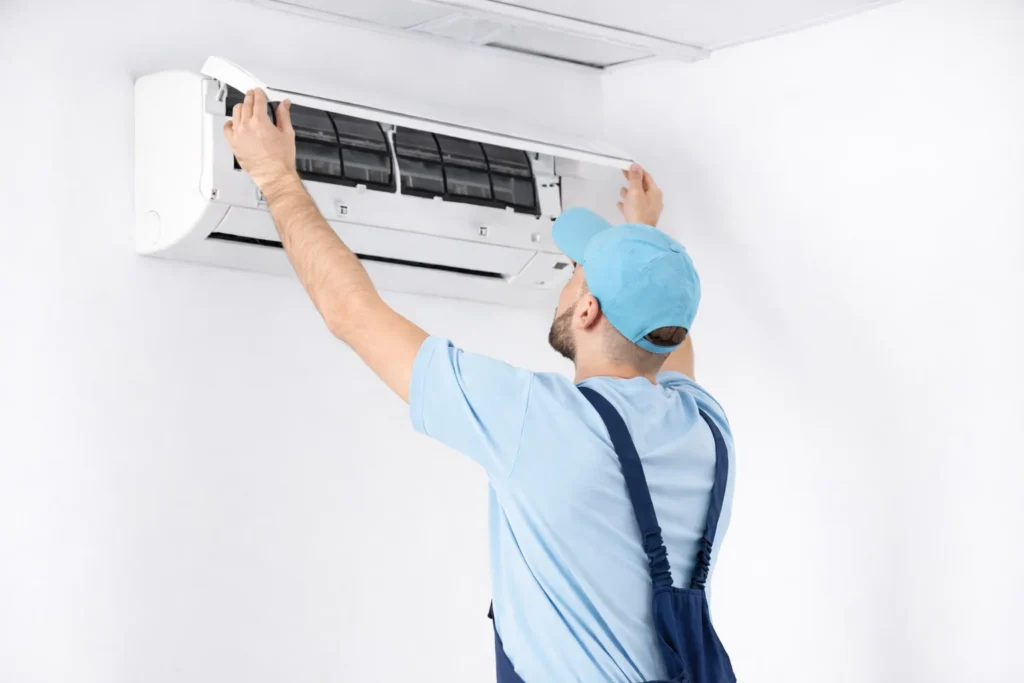
Low refrigerant is a common cause of air conditioner short cycling, where the unit turns on, runs briefly, then shuts off again before reaching the set temperature. Your system needs the correct refrigerant charge to operate properly. When levels drop due to a leak, the system loses its ability to transfer heat effectively and often trips out as a result.
Low refrigerant isn’t something you can top up yourself, it requires a licensed technician to locate the leak, repair it, and recharge the system to manufacturer specifications. Ignoring it leads to compressor damage, which is one of the more expensive repairs we deal with.
4. Electrical Faults and Faulty Capacitors
Capacitors are small but important, they give the motors in your system the electrical boost they need to start and run. When a capacitor starts to fail, the motor struggles, the system draws too much current, and the unit trips the safety switch or shuts down entirely. Electrical faults can also stem from loose wiring, corroded contacts, or a failing control board.
These aren’t problems to ignore or attempt to fix yourself. Electrical faults in air conditioning systems can be dangerous, and they tend to get worse over time.
5. Thermostat Issues
Sometimes the issue isn’t with the air conditioner itself, it’s with how the thermostat is reading the room. A thermostat positioned in direct sunlight, near a heat source, or in a poorly ventilated area will read higher temperatures than the actual room, causing the unit to think it’s reached the set point and switch off early.
We also see faulty thermostat sensors that simply give inaccurate readings. If your system seems to shut off well before the room is comfortable, the thermostat is worth checking.
6. Frozen Evaporator Coils
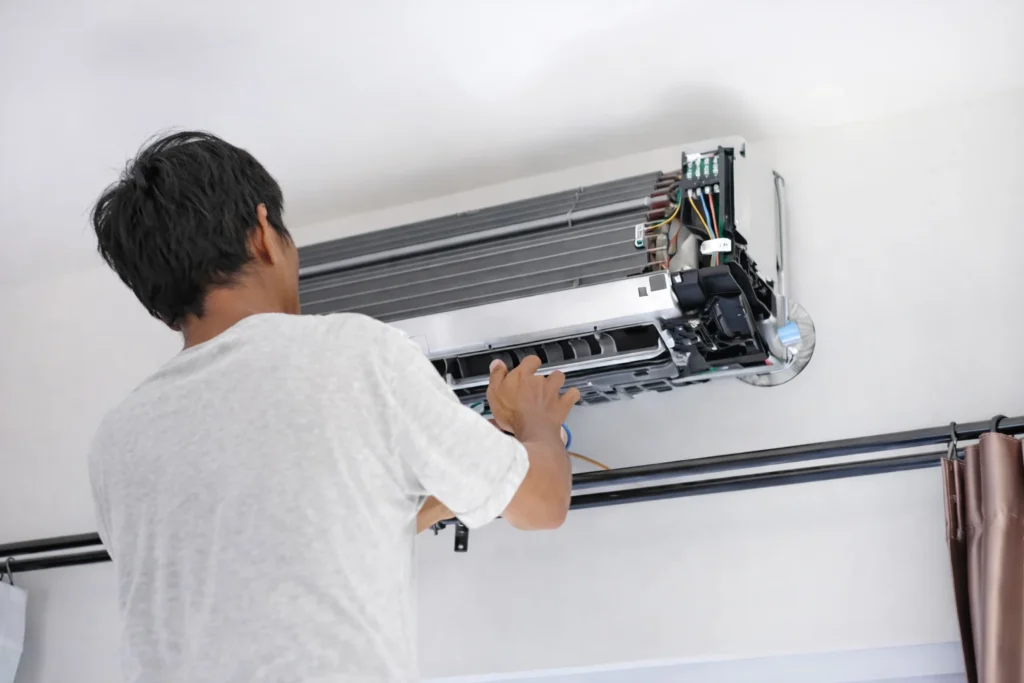
When airflow is restricted or refrigerant levels are low, the evaporator coils can drop below freezing and ice up. A frozen coil can’t absorb heat properly, so the system’s performance drops off sharply and eventually the unit shuts down to prevent damage.
If you notice ice forming on your indoor unit or frost on the refrigerant lines, switch the system off and let it thaw completely before running it again. Then call a technician to identify the root cause.
When Should You Call a Professional?
Frequent shutdowns, short cycling, or a tripped breaker are clear indicators that your system needs professional attention. These issues rarely resolve on their own, and continuing to run a faulty system can lead to more serious and far more expensive damage over time.
The experts at Radi Air are ready to help. If your air conditioner isn’t operating consistently, schedule a service call today. We’ll perform a thorough inspection, pinpoint the cause, and ensure your system is restored to peak performance.
Book a Service with Radi Air
If your air conditioner keeps shutting down unexpectedly, don’t wait for a complete breakdown. Contact Radi Air today to book a professional inspection. A qualified technician will identify the cause quickly and ensure the system is running safely and reliably again.
FAQs
1. Why does my air conditioner turn off after a few minutes?
This is usually a sign of short cycling, which happens when the system can’t complete a full cooling cycle. Common causes include a dirty air filter restricting airflow, low refrigerant levels, or an overheating compressor.
2. Is it normal for an AC to turn off and on frequently?
Some cycling is normal, your air conditioner should turn on, cool the room to the set temperature, then switch off until it’s needed again. What’s not normal is rapid on-off cycling, especially if the room isn’t reaching a comfortable temperature. Frequent short cycling puts unnecessary wear on your compressor and should be investigated by a professional.
3. Can a dirty filter cause my AC to shut off?
Yes, absolutely. This is one of the most common causes we see. A clogged filter blocks airflow through the system, causing it to overheat and trigger its internal safety switch. The fix is straightforward: clean or replace the filter.
4. How do I know if my AC is overheating?
Signs of an overheating air conditioner include the unit shutting off suddenly during hot weather, warm air blowing from the vents before shutdown, and the outdoor unit feeling excessively hot to touch.
5. What is short cycling in an air conditioner?
Short cycling is when your air conditioner turns on and off repeatedly in quick succession, without completing a proper cooling cycle. It’s hard on the compressor and means your home never quite reaches a comfortable temperature. Short cycling can be caused by a range of issues including low refrigerant, an oversized system, a faulty thermostat, or electrical problems. It’s not something to leave unchecked.
6. Can low refrigerant cause my AC to turn off?
Yes, low refrigerant is a well-known cause of air conditioner shutdowns and short cycling. When refrigerant levels drop due to a leak, the system can’t transfer heat efficiently and often trips its safety controls as a result.
7. Should I turn my AC off if it keeps shutting down?
If your system is repeatedly shutting itself off, we’d recommend switching it off at the wall and not attempting to keep restarting it. Running a unit that’s clearly struggling can cause further damage to components like the compressor, which is one of the costlier parts to replace. Give Radi Air a call, we can usually identify the issue quickly and get things sorted without unnecessary delay.
8. How often should I service my air conditioner in Sydney?
For residential systems, we recommend a professional air conditioning service at least once a year, ideally before summer when the system is going to be working hardest. For commercial or ducted systems, twice-yearly servicing is a better standard. Regular professional servicing keeps your system running efficiently, extends its lifespan, and helps catch small issues before they become expensive repairs. A quick filter clean every month or so between services is also a good habit.